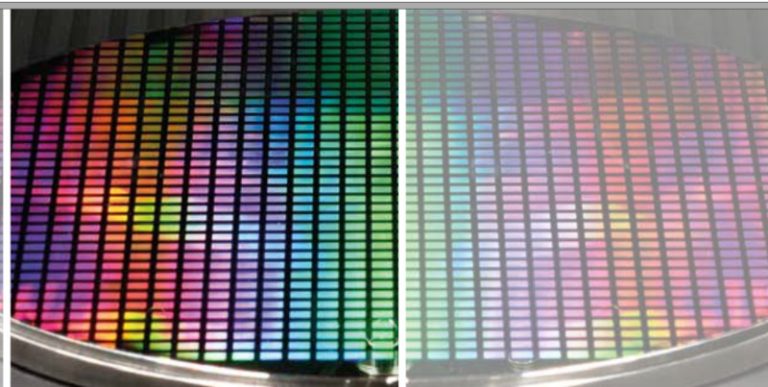
PicoTech offers a wide range of general purpose Table-top Reflectometers for R&D and laboratory use. Table-top Reflectometers can be single-spot systems or alternatively systems with wafer mapping function.
Difference between reflectometry and ellipsometry
Ellipsometry: Ellipsometry measures changes in the polarization state of light upon reflection from a sample. It provides information about the complex optical properties of materials, including refractive index (N) and extinction coefficient (K). Ellipsometers typically operate by measuring the change in polarization state (ellipticity and angle of polarization) of the reflected light, which is sensitive to the thin film properties. By analyzing the measured data with mathematical models, ellipsometry can determine various parameters such as film thickness, surface roughness, and composition. Ellipsometry is highly precise and can be used for both transparent and opaque films. It is commonly employed in research, development, and quality control applications in fields like semiconductors, optics, thin-film coatings, and material science.
Reflectometry: Reflectometry, on the other hand, focuses on measuring the intensity of reflected light from a sample. It is primarily used to determine film thickness and multi-layer structures. Reflectometers work by analyzing the intensity of light reflected at different wavelengths or angles, providing information about the film thickness or the thickness of each layer in a multi-layer stack. Reflectometry is often simpler and more cost-effective compared to ellipsometry, making it suitable for applications where precise optical property characterization is not required. Reflectometers are commonly used in the field of thin film coatings, surface analysis, and quality control.
Information obtained: Ellipsometry provides complex optical properties (N and K) in addition to film thickness, while reflectometry primarily focuses on film thickness measurements.
Measurement principle: Ellipsometry measures changes in the polarization state of light, whereas reflectometry analyzes the intensity of reflected light.
Precision: Ellipsometry is generally more precise and sensitive, allowing for detailed characterization of thin films, including transparent and opaque layers. Reflectometry provides simpler thickness measurements with relatively lower precision.
Applications: Ellipsometry is widely used in research and development settings where precise optical property analysis is required. Reflectometry is often employed in industrial applications for rapid and cost-effective thickness measurements.